
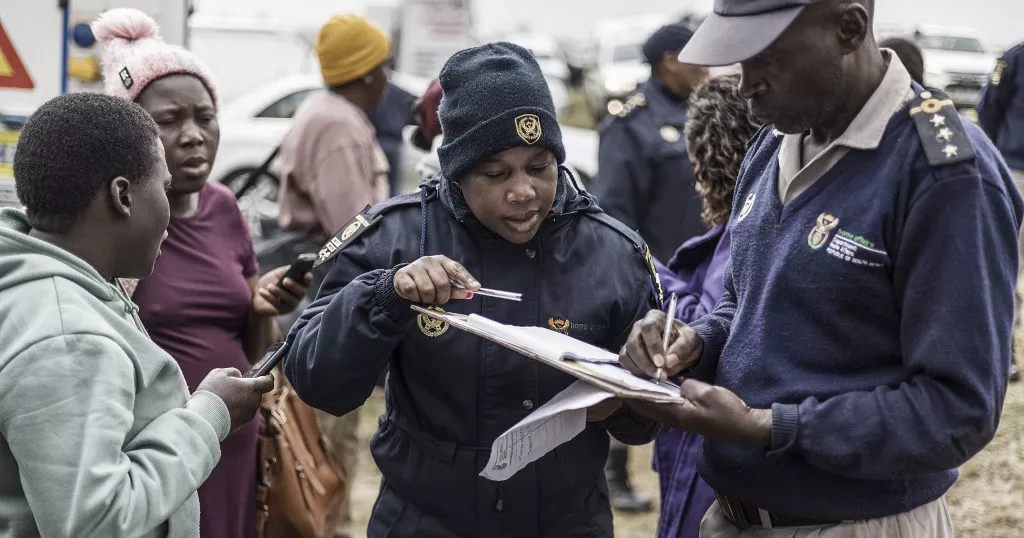
Understanding the functioning of human trafficking networks via the illegal migration routes from Zimbabwe and Mozambique to South Africa. A comprehensive, empirical study of risk, corruption, and solutions.
South Africa has traditionally been a popular destination for people who seek better economic opportunities and safety. However, in recent years, its boundaries with Zimbabwe and Mozambique have become important routes for illegal migration and human trafficking. These routes are not only harmful, but they also take advantage of the most susceptible– women, children, and desperate job seekers.
The meeting place of organized crime, weak borders, and corrupt institutions has created hotbeds for the transportation of humans. The effects are devastating: forced labor, sexual exploitation, child trafficking, and increasing pressure on the legal and public systems of South Africa.
In this article, we explore the inner workings of these illegal routes in detail, who benefits from them, who suffers, and how to stop them.
What is the definition of human trafficking?
Human trafficking is the procuring, transportation, transfer, harboring, or receiving of humans via coercion, kidnapping, fraud, or abuse of power in order to profit. It’s different from smuggling, which is typically accomplished by voluntarily traversing the border, while human trafficking is committed by taking advantage of others without them having to participate.
The UNODC (United Nations Office on Drugs and Crime) has reported that human trafficking is increasing in southern Africa, this is caused by poverty, conflict, and insufficient border enforcement.
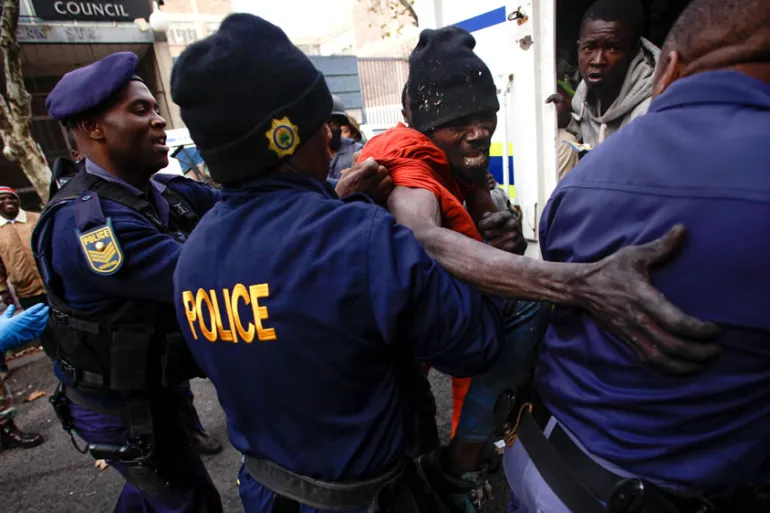
Main routes: Zimbabwe and Mozambique
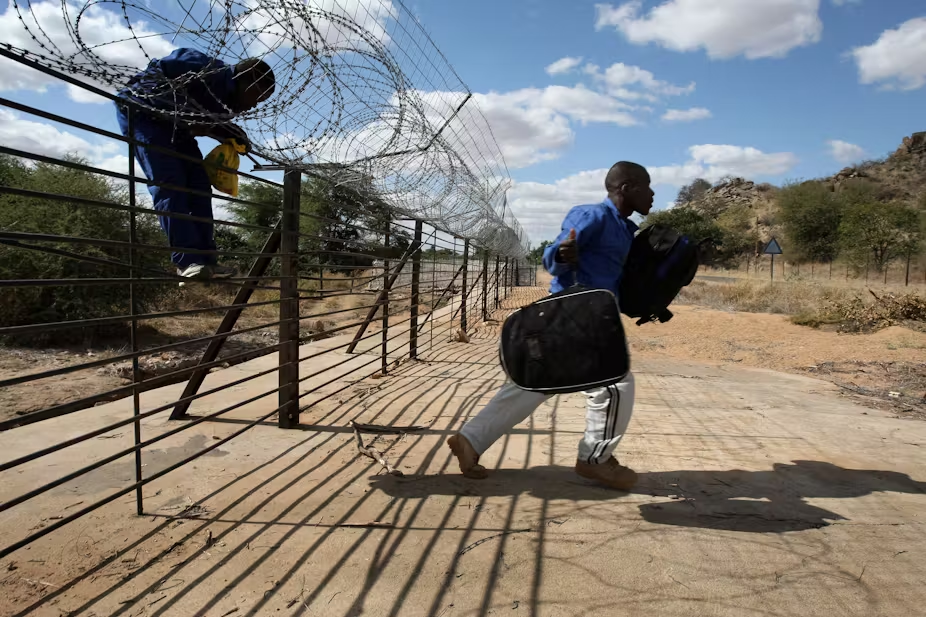
South Africa’s borders are: 1,225 kilometers with Zimbabwe; and 491 kilometers with Mozambique, which is mostly unregulated and porous. These territories are the primary entry points for immigrants and trafficked individuals that are illegal in South Africa. Avenoo in Zimbabwe
• Through the Beitbridge Gate, the most popular land border post in South Africa.
• Billions of dollars in property damage each year as a result of arson or lightning strikes.
Human smuggled networks are characterized by their openness: the cost per person is between R2 000 and R6 000.
CROSSING THROUGH MOZAMBIQUE
• Walk through the streets of Lebombo and get involved in informal bushes.
• Famous for the trafficking of children for agricultural labor and subservience.
Other Mozambican nationals are also involved in the trafficking of minerals and construction materials.
Main sources of heat:
Musina: facility used to transport and store goods for the purpose of trafficking.
• Komatipoort: the primary entrance for travelers from Mozambique.
Nelspruit and Johannesburg are considered to be centers of distribution or destination.
Who are the victims: the elderly, the children, and the adults?
Victims are often seduced by false narratives about employment or education. Many are derived from
• The rural parts of Zimbabwe are afflicted by economic malfunctions.
• Northern Mozambique, suffering from insurgency and extreme poverty.
• Malawi, the Democratic Republic of Congo, Tanzania, and Mozambique, all of which use Zimbabwe as a common stopover.
Vulnerability profiles:
Women were taken to the United States to have sex.
Children used as laborers, beggar-thy-neighbor.
• Men compelled to labor in agriculture, mining and construction without receiving payment.
The IOM (International Organization for Migration) estimates that up to 25% of people who cross the borders illegally are involved in trafficking or are subjected to extreme exploitation.
Corruption and institutional decadence
The successful performance of these trafficking organizations is primarily dependent on
Corrupt officials at the border who take bribes in order to let people through.
False invoices that are issued in exchange for money.
Low-quality shelters that delay the process of seeking asylum and force people to operate in the shadows.
Incomplete victim identification and insufficient prosecution of traffickers.
According to Corruption Watch South Africa, at least 60% of the reported instances of corruption at the border are attributed to officials from the Ministry of Home Affairs or SAPS.
The boundary between South Africa and Zimbabwe is mostly accessible during the night, a local NGO employee says. “Soldiers and police have a blind eye for an extra $10,000.00.”
Impact on South Africa
Safety and crime in the public sphere
• People who are trafficked are frequently involved in criminal labor chains.
Some people are compelled to take drugs or steal, especially children.
The increase in trafficking-related crimes in Mpumalanga, Limpopo and Gauteng.
Public facilities
Victims are often in need of immediate medical attention, shelter or legal help.
• NGO’s that take in refugees are overburdened and underfunded.
Immigration courts and border processing units have large amounts of backlogs.
financial burden
The costs of capturing, processing and helping illegal immigrant’s victims of trafficking are documented in this section.
Lost tax revenue from informal and illegal employment sectors.
The reputation of South Africa is tarnished in the international community in regards to human rights.
Data and graphs
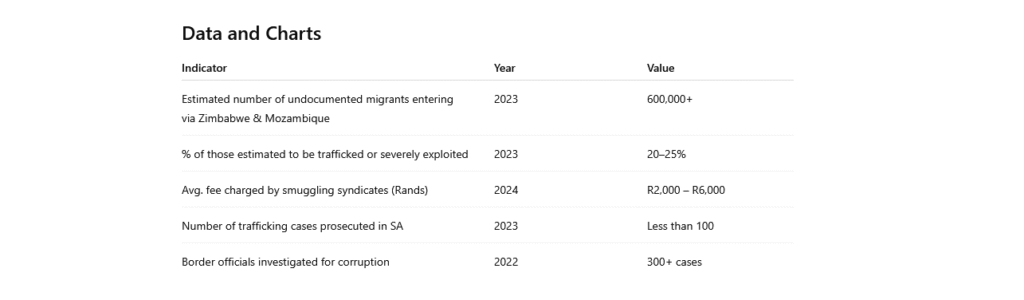
Sources: IOM, UNODC, Corruption Watch, and Home Affairs of the State
Ideas and practical solutions
To deconstruct these networks and shield victims, experts recommend:
Integrated border management, utilizing technology (drones, biometric scanners)
• Corruption units that are embedded in important areas.
• Immediate victim identification and assistance programs ( spearheaded by IOM, the UNHCR, and NGOs)
• Sharing of intelligence across borders between South Africa, Zimbabwe and Mozambique.
rigorous pursuit of traffickers and associated officials
Public awareness initiatives in native communities.
Legal migration routes that prevent abuse upon ingress.
Human trafficking that is illegal in Africa’s southern region via Zimbabwe and Mozambique is more than just a problem of borders – it is a crisis that involves humanity. The combination of poverty, desperation and corruption promotes a powerful storm that traffickers profitably profit from. To mitigate this crisis, South Africa must take immediate and strategic action – increasing its borders, assisting victims and punishing criminals. Above all, it must prioritize the treatment of each individual over the mere recording of numbers, it must also promote the concept of treating each individual as if they are deserving of honor and protection.
FAQ – Frequently Asked Questions
1. What is the distinction between human trafficking and illegal migration?
Smuggling is often illegal and requires authorization, the border is typically where it ends. Human trafficking involves trafficking of humans, this is often followed by exploitation.
2. How do people travel to South Africa illegally from Zimbabwe or Mozambique?
Through the rivers, fences or officials who are paid by the government at the border stations like Beitbridge and Lebombo.
Who are the primary recipients?
Women, children and seekers for jobs from Zimbabwe, Mozambique, Malawi and the Democratic Republic of the Congo.
4. Why are boundaries so susceptible?
Because of the long, porous landscape, limited patrols and corruption among officials.5. What industries do trafficking victims participate in?
The labor market, mining, building, domestic work, street bargaining and criminal organizations.
6. Is the practice of human trafficking increasing in Africa’s southern region?
Yes, this is especially pertinent to the post-COVID recovery period and regions that have experienced economic downturn.
7. What is being attempted to halt this?
South Africa is partnered with IOM, the UNHCR, the SADC and other organizations in law enforcement, victim assistance and reforms.

